
Introduction: Why USB4 Is a Turning Point for the Connectivity Industry
The launch of USB4 marked a fundamental shift in how modern devices handle data transfer, video output, and power delivery. Unlike previous USB generations, USB4 is not just faster—it is smarter, more flexible, and deeply integrated with high-performance computing ecosystems.
For global B2B buyers, brand owners, and OEM partners, USB4 is no longer a future concept. It is already shaping product roadmaps across laptops, docking stations, monitors, external storage devices, and professional workstations.
This article provides a deep, OEM-focused analysis of USB4—what it is, how it works, and why manufacturing capability matters more than ever.
1. What Is USB4? More Than a Speed Upgrade
USB4 is a protocol specification developed by the USB Implementers Forum (USB-IF), built upon Thunderbolt architecture. Unlike earlier USB versions, USB4 unifies multiple technologies into a single, scalable framework.
Core Characteristics of USB4
- Maximum data bandwidth up to 40 Gbps
- Protocol tunneling (USB, DisplayPort, PCIe)
- Dynamic bandwidth allocation
- Mandatory USB-C connector
- Improved power delivery integration
USB4 is not simply “USB faster than before.” It represents a convergence of data, video, and power into one intelligent interface.
2. USB4 vs USB 3.2: Key Differences OEM Buyers Must Understand
One common mistake in the market is assuming USB4 is just a higher-speed version of USB 3.2. In reality, the differences are architectural.
| Feature | USB 3.2 | USB4 |
|---|---|---|
| Max Speed | Up to 20 Gbps | Up to 40 Gbps |
| Protocol Tunneling | No | Yes |
| PCIe Support | No | Yes |
| Dynamic Bandwidth | No | Yes |
| Thunderbolt Compatibility | Limited | Built-in |
For OEM projects, these differences directly affect cable design, material selection, and testing requirements.
3. USB4 Data Transfer: Designed for High-Performance Applications
USB4 enables data transfer speeds up to 40 Gbps, making it suitable for:
- External SSDs
- Professional video editing workflows
- High-speed docking stations
- AI and data-intensive peripherals
However, achieving stable 40 Gbps performance requires:
- Precision impedance control
- Advanced shielding structures
- High-frequency cable manufacturing expertise
This is where OEM manufacturing capability becomes a decisive factor.
4. USB4 and Video: Multi-Display Support Without Compromise
USB4 supports DisplayPort tunneling, allowing high-resolution video signals to share bandwidth dynamically with data.
Video Capabilities
- Single 8K display or dual 4K displays
- High refresh rates
- Reduced latency
- Seamless integration with docking stations
For cable and hub manufacturers, video performance depends heavily on signal integrity engineering, not just connector compliance.
5. Power Delivery in USB4: High Power, Higher Risk Without Proper Design
USB4 works closely with USB Power Delivery (PD) standards, supporting up to 240W under USB PD 3.1.
OEM Considerations for High-Power USB4 Cables
- E-marker chip accuracy
- Thermal management design
- Copper conductor gauge selection
- Insulation material quality
Without proper engineering, high-power USB4 cables can overheat, degrade, or fail prematurely—posing serious risks for brand owners.
6. The Role of E-Marker Chips in USB4 Cables
E-marker chips are no longer optional for USB4 cables.
What E-Markers Do
- Communicate cable capabilities to devices
- Enable safe power negotiation
- Identify maximum speed and current support
OEM manufacturers must ensure:
- Certified chip sourcing
- Correct firmware programming
- 100% functional verification
Incorrect E-marker implementation is a common cause of USB4 compatibility issues in the market.
7. Inside a USB4 Cable: Engineering Complexity Explained
Compared to USB 3.2 cables, USB4 cables are significantly more complex.
Internal Structure Includes
- Ultra-low-loss copper conductors
- Multiple differential pairs
- Multi-layer shielding (foil + braid)
- High-temperature dielectric materials
- Precision connector molding
Each layer must be manufactured within tight tolerances, requiring advanced equipment and skilled engineering teams.
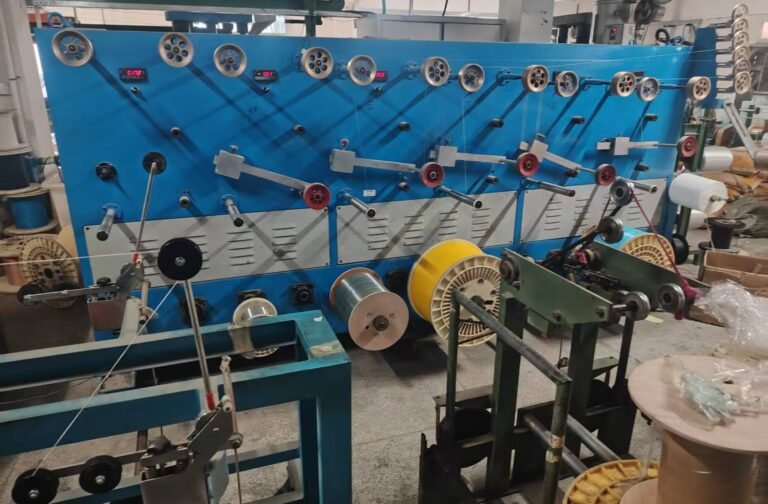
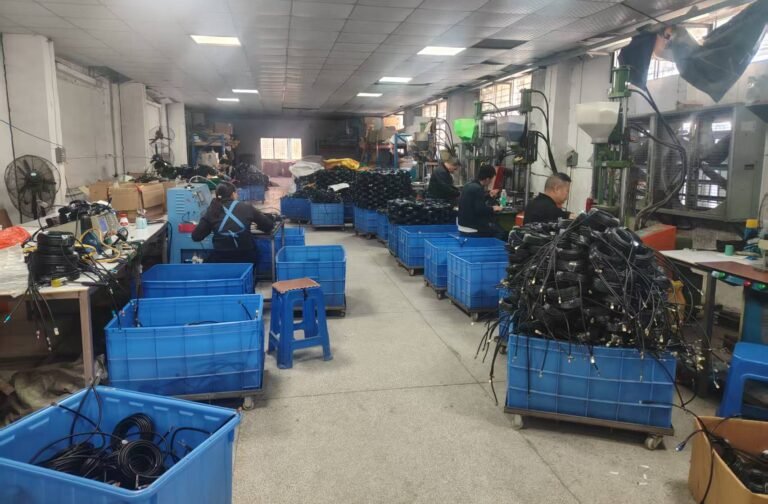
8. Why Fully Automated Manufacturing Is Critical for USB4
Manual or semi-automatic production methods are insufficient for USB4.
Benefits of Fully Automated Production
- Consistent impedance control
- Reduced signal deviation
- Higher production efficiency
- Stable large-volume output
For global OEM buyers, automation directly translates to lower defect rates and predictable quality.
9. Testing USB4: Why Standard Testing Is Not Enough
USB4 cables must undergo more than basic continuity checks.
Essential USB4 Testing Includes
- High-frequency signal testing
- Eye diagram analysis
- Power load and thermal testing
- Plug/unplug durability testing
Professional OEM factories implement 100% automated testing, ensuring every cable meets performance requirements.
10. USB4 Compliance and Global Certifications
USB4 products targeting North America and global markets must meet strict compliance standards.
Common Requirements
- USB-IF compliance testing
- FCC / CE certification
- RoHS and REACH compliance
- UL certification for power safety
OEM manufacturers experienced in global compliance help brands reduce time-to-market and regulatory risks.
11. USB4 in OEM Projects: Customization Challenges and Solutions
OEM USB4 projects often require customization beyond standard products.
Typical Custom Requirements
- Cable length optimization
- Connector housing design
- Branding and private labeling
- Packaging for retail or B2B distribution
- Performance tuning for specific devices
A strong OEM partner provides engineering consultation, not just manufacturing.
12. Market Outlook: Why USB4 Adoption Will Accelerate
USB4 adoption is accelerating due to:
- Growing demand for high-performance laptops
- Expansion of multi-display workstations
- Increased use of docking solutions
- Shift toward single-cable connectivity
Brands that invest early in USB4-ready supply chains gain a long-term competitive advantage.
Conclusion: USB4 Is a System-Level Technology
USB4 is not merely a faster cable—it is a system-level connectivity solution requiring deep technical expertise and manufacturing excellence.
For global B2B buyers and OEM partners, success with USB4 depends on:
- Advanced engineering capability
- Fully automated production
- Comprehensive testing systems
- Reliable long-term manufacturing partners
Choosing the right USB4 OEM manufacturer today is a strategic decision that will shape product success for years to come.