
Introduction: Why Choosing the Right OEM Partner Matters More Than Ever
As USB-C and USB4 technologies become standard across laptops, docking stations, displays, and smart devices, the role of the OEM manufacturer has fundamentally changed.
USB-C cables are no longer simple accessories. They are high-precision electronic components that directly affect device performance, safety, and user experience. For global B2B buyers—especially in North America—selecting the wrong manufacturer can lead to:
- Product failures and returns
- Compliance and certification issues
- Delayed market entry
- Long-term damage to brand reputation
This article provides a practical, professional checklist to help buyers evaluate and select a reliable USB-C and USB4 OEM manufacturer with confidence.
1. Manufacturing Capability: Automation Is No Longer Optional
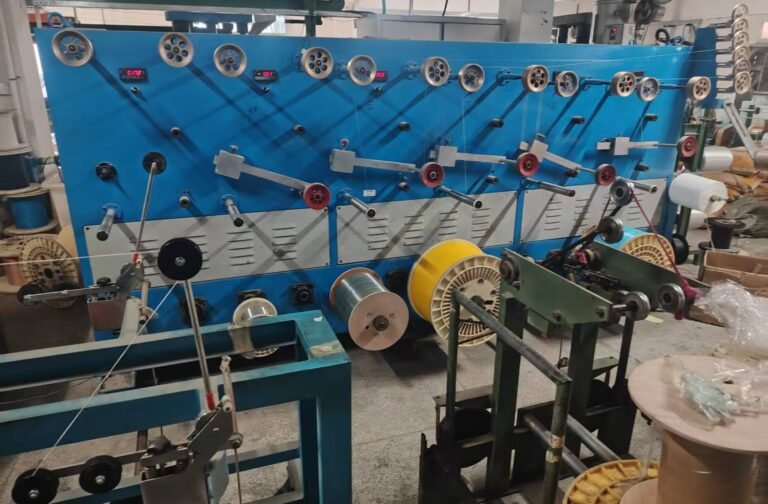
High-speed USB-C and USB4 cables require extreme consistency. Manual or semi-manual production cannot meet modern performance requirements.
What Buyers Should Look For
- Fully automated cable production lines
- Automated soldering and molding processes
- Stable high-volume manufacturing capacity
Why It Matters
Automation ensures:
- Consistent impedance control
- Reduced human error
- Predictable quality across large orders
A factory with advanced automation is better equipped to support long-term B2B partnerships, not just short production runs.
2. Technical Expertise in High-Speed Signal Transmission
USB4 and USB-C 3.2 operate at very high frequencies, making signal integrity a core challenge.
Key Technical Capabilities
- High-frequency cable manufacturing experience
- Understanding of differential pair design
- Shielding and grounding optimization
- Impedance matching control
Manufacturers without high-frequency expertise may produce cables that pass basic tests but fail in real-world use.
3. Testing Systems: 100% Testing Is the Industry Standard
One of the biggest differences between low-cost suppliers and professional OEM manufacturers lies in testing depth.
Essential Testing Processes
- Continuity and short-circuit testing
- High-speed signal testing
- Power load and thermal testing
- Plug/unplug lifecycle testing
Buyer Tip
Avoid suppliers that rely only on random sampling.
Professional OEM factories implement 100% automated testing to ensure every cable meets specifications.
4. E-Marker Chip Integration and Verification
For USB-C and USB4 cables supporting high power and high speed, E-marker chips are mandatory.
What a Reliable OEM Should Offer
- Certified E-marker chip sourcing
- Correct firmware programming
- Full functional verification during production
Incorrect E-marker implementation can cause:
- Charging instability
- Device compatibility issues
- Safety risks
OEM manufacturers must treat E-marker integration as a core engineering process, not an add-on.
5. Material Selection and Supply Chain Stability
Cable performance depends heavily on internal materials.
Key Materials to Evaluate
- High-purity copper conductors
- Multi-layer shielding (foil + braid)
- Heat-resistant insulation materials
- Durable connector housings
In-house control of materials—or long-term partnerships with trusted suppliers—ensures consistent performance and delivery reliability.
6. Certification and Compliance Experience
For North America and global markets, compliance is non-negotiable.
Common Certifications
- USB-IF compliance
- CE / FCC
- RoHS / REACH
- UL (for power-related products)
An experienced OEM manufacturer can:
- Assist with documentation
- Support compliance testing
- Reduce certification lead time
This is especially important for new product launches.
7. OEM & ODM Customization Capability
Most B2B buyers require customization beyond standard products.
Typical Customization Needs
- Cable length and structure
- Connector angle and housing design
- Private labeling and branding
- Packaging customization
- Performance tuning for specific devices
A strong OEM partner provides engineering consultation, helping buyers optimize product design—not just manufacture it.
8. Production Capacity and Scalability
A reliable OEM manufacturer must support growth.
Questions Buyers Should Ask
- Monthly production capacity
- Ability to scale for peak demand
- Lead time stability
- Backup production planning
Manufacturers with large-scale facilities and multiple production lines are better prepared for long-term cooperation.
9. Communication and Project Management
Technical products require clear communication.
Signs of a Professional OEM Partner
- Dedicated project or sales engineers
- Clear technical documentation
- Transparent production schedules
- Fast response to technical questions
Good communication reduces misunderstandings and speeds up time-to-market.
10. Long-Term Partnership Mindset
The best OEM manufacturers do not compete only on price.
They focus on:
- Stable quality
- Continuous process improvement
- Long-term customer success
For B2B buyers, choosing an OEM partner is a strategic decision, not a short-term transaction.
Buyer’s Final Checklist
Before selecting a USB-C or USB4 OEM manufacturer, ensure they offer:
- ✅ Fully automated production
- ✅ Advanced high-frequency engineering
- ✅ 100% automated testing
- ✅ Certified E-marker integration
- ✅ Global compliance support
- ✅ OEM & ODM customization
- ✅ Scalable production capacity
Conclusion: The Right OEM Partner Is a Competitive Advantage
In today’s connectivity market, success depends on more than product design. It depends on manufacturing excellence, engineering depth, and reliable execution.
For brands and B2B buyers targeting North America and global markets, choosing the right USB-C and USB4 OEM manufacturer ensures:
- Stable product performance
- Lower after-sales risk
- Faster market entry
- Stronger brand reputation
A reliable OEM partner is not just a supplier—it is a long-term competitive advantage.